NOTE: The following was printed in a different form on June 19, 2026. It has been revised with the guidance of Music for Thought on Medium, specifically their editor, Hannah’s Café. They have my thanks.
“But of that day and that hour knoweth no man, no, not the angels which are in heaven, neither the Son.” Mark 13:32
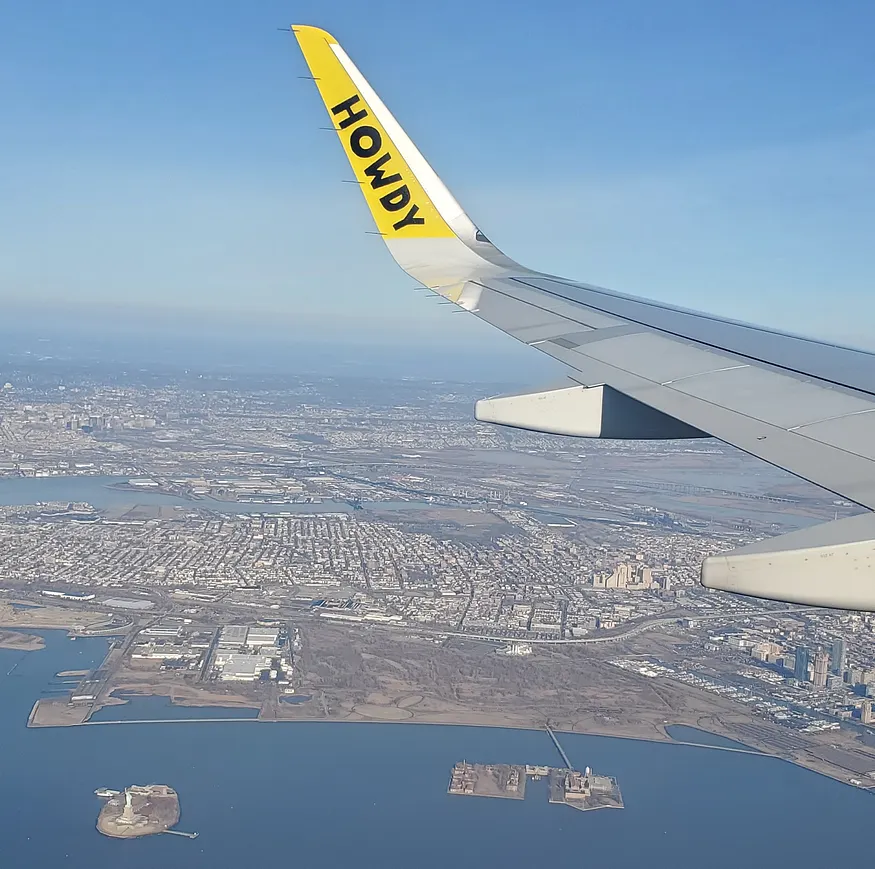
March 3, 2020. Tuesday at 9 AM.
What strikes me about this photo now is how little we all knew of what was to come. The uncomprehending splendor of lower Manhattan. The imbecilic cheer of the Spirit logo. The Statue of Liberty looking on in Lilliputian futility as death comes galloping. This is what the beautiful life looked like just before the global pandemic wiped the smile off its stupid face.
That Tuesday morning, I was a high rolling investor in the fragile Bella Vita. A theater major who made his living primarily in unartistic venues, I had come to tether self-definition and fulfillment snugly to artistic consumption. At an age when my friends sacrificed every freedom to their expanding families, my sacrifices were to arthouse cinemas, regional theaters, and intimate concert venues. As for death, the curtain drop that preempted every show, we were mostly acquainted through plays. “Alas, poor Yorick,” was my jam. “Where be your gibes now? your gambols? your songs?” If you’d asked for my most painful bereavement, I might have cited Love! Valour! Compassion! by Terrence McNally.
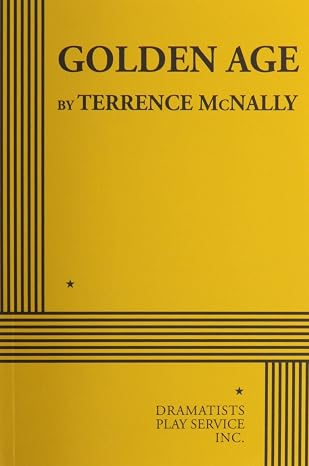
McNally’s jam was opera. When he wasn’t writing plays about it, he was listening to it on LP, or regaling encore anecdotes on radio’s Texaco Opera Quiz. His play Golden Age, staged in 2012 at the New York City Center, memorializes the bel canto era of the early 19th century. The setting is 1835, coinciding with the slow fade of the era’s increasingly idle idol, Gioachino Rossini. The Barber of Seville composer stopped writing operas in his thirties and dedicated himself to a full-time, debauched Brutta Vita.
Also featured in Golden Age is bel canto’s shooting star, Vincenzo Bellini. The “Casta Diva” composer was cut down at 33 by amoebic dysentery. McNally declined to memorialize the demeaning truth of Bellini’s passing, preferring to cast it as a consumptive Bella Morte. McNally’s instinct to cave to a clichéd, respectable expiration may reflect his affinity for opera, a genre in which everyone dies and every death culminates in soaring crescendo.
Ironically, McNally’s own demise was an agonizing Brutta Morte. He was among the first celebrity victims of the pandemic that was perched on Manhattan’s doorstep as I touched down at LGA on March 3, 2020. McNally was probably at his Greenwich Village home that morning, deciding whether to outrun the swiftly spreading novel coronavirus. He had survived the AIDS crisis, two lung cancer surgeries, and three decades of Chronic Obstructive Pulmonary Disease, only to succumb to an illness that most immune systems shrug off in a few days of mild discomfort.
Of that day and that hour knoweth no man. For someone as dependent on consuming art as I was in early 2020, the pandemic was itself a sort of temporary death. During lockdown, I became an opera fan and read McNally’s Golden Age. This essay is a quartet between the four of us about the lesson I learned that year:
The beautiful life should be cherished while it lasts, and there is no such thing as a beautiful death.
ACT ONE: BELLA VITA (quartet)
ME My 89-year-old father is still recovering from our 5 AM flight, but I’m barreling through LaGuardia like the Budget Rental Car office is about to close up. It’s not a business trip, but it certainly is not leisure. A friend needs help moving out of downtown Manhattan. We have one day to help, and no lodging booked for the night. I have two part-time jobs, so I am not being paid for the time off, and there is no remote work option. I am inwardly calculating the temporal cost of a Chinatown lunch.
My brother has other ideas. That night, Agrippina will be the fifth production of a Georg Frideric Handel opera in the 137-year history of the Metropolitan Opera, but I don’t know much about opera yet.
To me, the bigger draw is the first preview performance of Who’s Afraid of Virginia Woolf? with Laurie Metcalf and Rupert Everett as the bilious couple playing drinking games for keeps in the 1962 drama that Edward Albee based partly on his relationship with Terrence McNally. It will be performed only nine times before it is swallowed by history.
Across the East River at St. Anne’s Warehouse, Ethiopian-Irish actress Ruth Negga is reprising her cunning, boyish turn in the incense-soaked Hamlet I saw alone at Dublin’s Gate Theatre in 2018. The opening image of Negga’s grieving prince identifying his plastic-shrouded father in the morgue will come to feel like a summary of the year, and the realization that I’ll never have the chance to share it will fester smartingly long after The New York Times declares it the best play of the abbreviated year.
But on March 3, I am only dimly aware of the looming specter that awaits the world. Today, New York Governor Andrew Cuomo will announce confirmation of the state’s first recorded case of person-to-person spread of the “novel coronavirus.” In a matter of days, Bellevue Hospital, where I briefly parked our Jeep Compass, will be the site of a makeshift morgue.
The notoriously compressed city will confirm nearly 18,000 cases before the end of the month, making New York the epicenter of a global pandemic. Chinatown will combat the entrenched misperception that the spread started here.
That is the real reason to rush my elderly father out of Manhattan and sacrifice precious indulgences in a beautiful cultural life that will soon cease to exist anywhere on the globe. But on March 3, I’m just impatient. Forget the Chinatown lunch; it’s faster to eat at a halal cart.
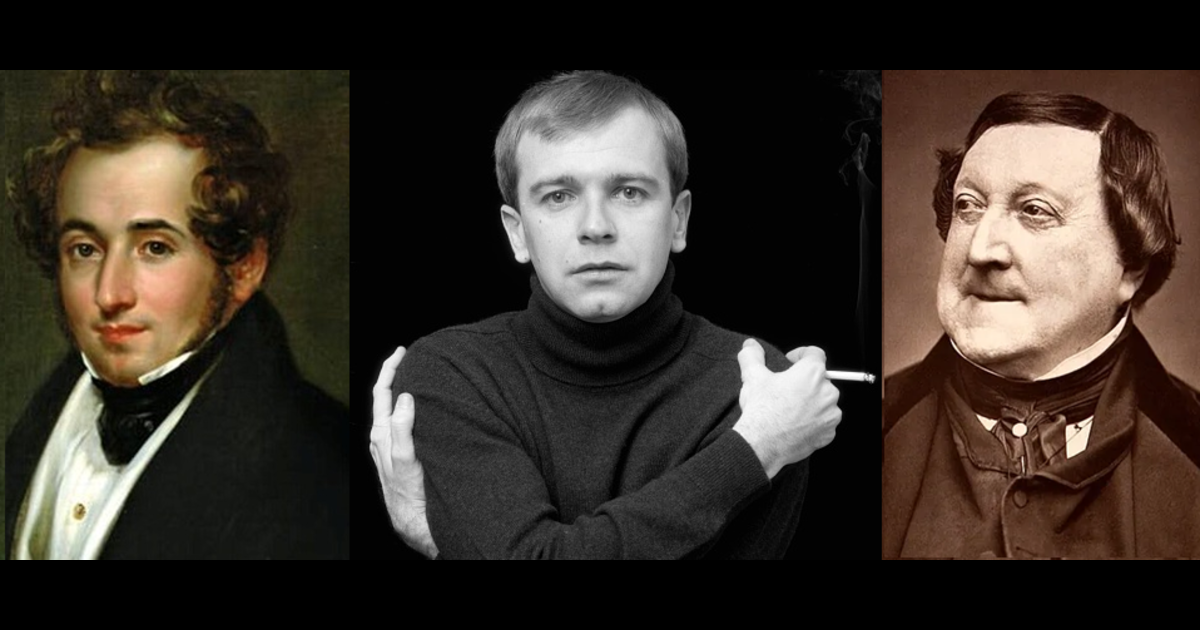
BELLINI Vincenzo Bellini was a poster boy for the bel canto era (the Italian phrase translates to “beautiful singing”). During that period, early in the 19th century, opera blossomed into a gloriously showy caricature of itself. The bel canto composers succeeded the elegant 18th-century craftsmanship of Mozart and Glück with daredevil coloratura runs of trilling high notes that seem to flow from a ceaselessly renewing fount.
Excess was the defining characteristic of Bellini’s life and music. He was the flamboyant middle child in the so-called “Bel Canto Trinity.” This threesome consisted of Bellini, his mentor Rossini, and his hated rival Gaetano Donizetti. “The only thing humble about … Bellini is his origins,” testifies one character in McNally’s Golden Age. “He’s become more French dandy than any Parisian.”
In the 1887 joint biography Great Musical Composers German, French, and Italian, George T. Ferris claims Bellini once chastised a singer for exhibiting insufficient passion. “You put no life into your music. Show some feeling. Don’t you know what love is?” The historical jury is still out on Bellini’s sexual orientation, but McNally, America’s famously out queer dramatist, leans into the rumors that his subject was a sensual omnivore.
TAMBURINI. Bellini likes men.
GRISI. Bellini likes women.
LABLACHE. Bellini likes everyone.
Terrence McNally, Golden Age

McNALLY
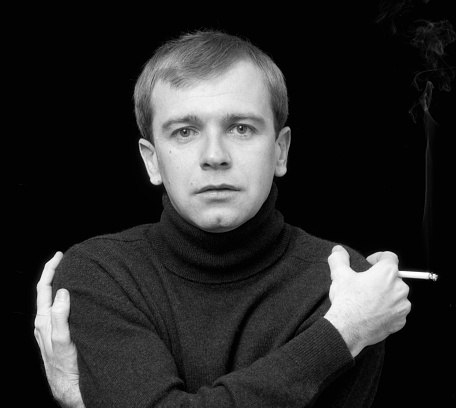
McNally’s portrait of Bellini is to some degree autobiographical. McNally never asked anyone to guess about his feelings for men. “He was writing about gay people when Tennessee Williams and Edward Albee were writing about straight people,” points out actor Michael Urie in a 2019 New York Times video tribute. Actually, Williams admitted the existence of closeted queers in Cat on a Hot Tin Roof and Streetcar Named Desire. By contrast, McNally’s 1965 Broadway debut was the first to feature a sexually active homosexual.
Still, he resisted pat pigeonholing. Christopher Byrne’s biography A Man of Much Importance: The Art and Life of Terrence McNally documents the playwright’s complex 1980s relationship with his most celebrated female peer, Wendy Wasserstein (The Heidi Chronicles). “It’s a bad time to be gay,” groused one friend in Byrne’s book, “so good for you, you can switch.”
But McNally shrugged off the gossip, stating simply that he was “a gay man in a relationship with a woman.” Today, McNally’s honest fluidity seems ahead of its time.
The youthful McNally apparently resembled Bellini physically. Consider Ferris’s description of Bellini:
Nature gave him a beautiful and ingenuous face, noble features, large, clear blue eyes, and abundant light hair.
Compare that Albee’s account in Mel Gussow’s Edward Albee: A Singular Journey of his first encounter with McNally:
I noticed this nineteen-year-old, a ravishing-looking blond kid lurking around the place. I found out he was a college student named Terrence McNally who wanted to be a playwright. Well, Terrence and I started talking and the next thing I knew, so to speak, we were living together.
At the time, McNally was on a sort of pilgrimage to New York City from his hometown of Corpus Christi, Texas, where there were few out gay men and few opera fans with voluminous vinyl collections. He had discovered opera in a rowdy grade school classroom. A teacher played Madame Butterfly, and the 11-year-old McNally was transfixed in glory while his classmates brawled around him.
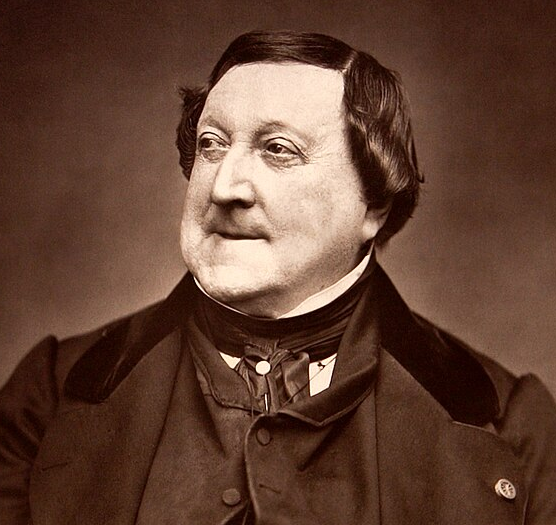
ROSSINI Gioachino Rossini was opera’s most prolific composer. He generated an astounding 39 vocal dramas between the ages of 14 and 37. That’s 11 more operas than even Giuseppe Verdi, the maestro who succeeded the bel canto era, managed in a 60-year career that spanned the latter portion of the 19th century.
If Bellini manifested his beauty addiction as a voracious romantic appetite, Rossini binged on conspicuous consumption. Ferris confirms this. “Rossini could write best when he was under the influence of Italian wine and sparkling champagne.”
Rossini was endlessly gifted but lazy. He would party as long as possible, and then fall back on his effortless genius. “Rossini’s idleness and love of good cheer always made him procrastinate his labours till the last moment,” explains Ferris, “and placed him in dilemmas from which only his fluency of composition extricated him.”
ACT TWO: BRUTTA VITA (quartet)
ME By mid-March 2020, the beautiful life was officially sheltering in place. Days of lockdown turned into weeks turned into months turned into a full year before vaccinations unlocked our mutually solitary cages. Some of those days, it was possible to get a sidewalk seat at a local eatery, but the cost of those visits was unremitting disease anxiety and internal moral conflict. Theaters of every description decided that dilemma on our behalf. They simply extinguished their ghost lights.
In the earliest days, I agonized over whether to risk showing up for a long-anticipated production of Henrik Ibsen’s Lady from the Sea. After the March 12 cancellation, I agonized over whether to donate the tickets or request a refund from an economically crushed institution.
And don’t think I don’t hear your patronizing “aww.” The World Health Organization says the global body count was at 4,291 that day, and I was rending my garments over the loss of pricey tickets to a play I actually saw two years later. I don’t share Rossini’s taste for fancy wines or Bellini’s weakness for sex, but I can’t pretend I haven’t felt the beautiful life mount into gluttonous surfeit. I was diagnosed with type two diabetes during the pandemic, and I tried not to picture rampant sugar systematically breaking down my organs.
Oh, the plays I couldn’t see. Art can nourish the spirit, but when consumed to excess, it can glut the whole system. I get it, but the loss still aches.
McNALLY McNally’s volatile five-year partnership with Albee grew ugly in a starkly different way. The beautiful life for Albee, already smashingly successful thanks to The Zoo Story, consisted of bottomless gin and bourbon binges. The couple’s friend Robert Heide claims their intense drinking bouts served as the template for George and Martha’s drunken death matches (“Hump the Hostess,” “Get the Guests,” “Bringing Up Baby”).
Terrence McNally, just out of Columbia University, also attended those late night affairs and later we realized that the model in Virginia Woolf? for Honey who ends up drunk on the floor, puking, was a combination of both of us…. I told him that one night … while sprawled on the floor, I had heard Albee, Rorem and others who were standing above me jokingly but cynically saying “Well, if he wants to kill himself, let him.” ROBERT HEIDE, “CAROUSING IN THE VILLAGE WITH TERRENCE AND EDWARD,” WESTVIEW NEWS, MAY 3, 2020
Even a beautiful life can become ugly when lived to excess.
BELLINI
He hasn’t written anything in twenty years. All he does is bask in his past triumphs and eat dishes named for him. Have you tasted a Tournedos Rossini? No wonder he has the gout. Bellini discussing Rossini in Terrence McNally’s Golden Age
ROSSINI In stark contrast to Bellini, who never reached his mid-30s, fate granted Rossini four decades of sybaritic comfort after he voluntarily extinguished his own incandescent artistic flame. Corpulent and lazy but ever the life of the resplendent dinner party, Rossini recedes from creation as if disgusted by the limits of his facile genius. In his book, Ferris enumerates Rossini’s flaws:
That he gave too little attention to musical science; that he often neglected to infuse into his work the depth and passion of which it was easily capable; that he placed too high a value on merely brilliant effects.
If Rossini evaded his divine calling because he was ashamed of these flaws, that is an enduring tragedy. Nobody cares about such minutiae when they hear the solemn beauty of the 11 O’clock quartet in Mose in Egito.
In Golden Age, McNally gives Rossini a chance to explain himself, but the answer feels disappointingly pat. “I got tired,” he says. “I ran out of things to say.”
ACT THREE: BELLA MORTE (quartet)
ME Since Ibsen would not come to the mountain, the mountain came to Ibsen. My brother and I, egregiously fortunate to share a COVID bubble, curated an Ibsen video festival in our basement. The BBC’s Hedda Gabler posed a grimly timely question: was there a meaningful distinction between a bullet piercing your temple and a bullet piercing your bowels?
McNALLY When he wrote Golden Age, McNally clearly shared that operatic belief in the beautiful death. He gives his Bellini the same fate as Verdi’s Violetta: a noble, slow-motion, coughing surrender to tuberculosis. The cultured McNally was seemingly repulsed by Bellini’s actual cause of death: diarrhea.
Considering that McNally had been facing down death ever since a disease then called GRID (Gay-Related Immune Deficiency) halted gains toward a beautiful queer life in the 1980s, his dialogue about mortality in Golden Age is surprisingly pedestrian. It’s as if McNally, clinging to opera’s myth of enduring beauty, was incapable of grasping the solitary horror of mortality.
You know what I shall miss the most? The seasons. The first flowers of spring. The earth tells us that the cycle has begun again. Bellini in Terrence McNally’s Golden Age
The usually masterful dialogist provides a far more poignant conclusion in the stage directions: “The Page comes into the empty room. He looks around for what is left of the pizza…. Still eating, he sees Bellini’s bloodied handkerchief on the floor. He looks at it but continues to eat.”
Mortality is an operatic melodrama only to a precious few. The rest of the universe glances at our impassioned histrionics and yawns.
BELLINI Vincenzo Bellini died at 33, also the final age of Jesus Christ. The same age of demise as John Belushi and Chris Farley and Sam Cooke, a change is gonna come. Folk singer David Wilcox is no Bellini, but he did write these memorable lyrics in his 1997 folk song “Glory”:
In the big boring middle of our long book of life
After the twist has been told
If you don’t die in glory at the age of Christ
Then your story is just getting old
David Wilcox, “Glory”
ROSSINI Rossini was 43 when Bellini died. He would live for exactly 33 more years. I’m not making this up. No one knoweth the hour, but bel canto was already dead, the incandescent torch passed to the more restrained, more psychologically sophisticated Giuseppe Verdi. In Golden Age, the 22-year-old Verdi attends I Puritani to pay homage to a dying legend. “He’ll need another name for the theatre,” grouses Rossini, aging into obscurity. “Giuseppe Verdi, it sounds like a farmer.”
ACT FOUR: BRUTTA MORTE (aria)
McNALLY In March 2020, the 81-year-old Terrence McNally struggled with every gasp to inflate the damaged air sacs in his one remaining lung. He occupied precisely the high-risk group that was repeatedly defined by the media throughout the pandemic.
Terrence and his husband Tom decide to make a break for it. They board a JetBlue flight for Florida, determined to outrun the novel coronavirus. Terrence tries to sanitize the airport bathrooms, but no one knows how this thing spreads. No one knows how to breathe contaminated air with just one lung. I can only imagine the isolation he endured and what it must have done to his slowly eviscerating mind.
The spiky protein exponentially multiplies, no one can join him in the hospital, he can’t infect Tom, Andrea Chénier alone at the guillotine, Aida alone in the tomb, the 11-year-old blond boy is thunderstruck by Butterfly’s aria “Un bel di, vedremo” in a classroom where nobody cares, where nobody is gay, where only Callas understands, un bel di vedremo, “one fine day we’ll see,” Callas singing softly in Sarasota sterility, and there at last is Tom.
That hour knoweth no man, but it is March 24, and it is 10:45 AM in Sarasota.
CODA
BELLINI
Gaetano Donizetti is everything I detest in this business: banal melodies, orchestrations that would embarrass a student, toadying up to the impresarios, brown-nosing the press. The only reason he’s here tonight is to see me fail…. And yet, he’s a fellow composer. He knows how hard and long the distance is from this (He points to his heart.) to this (He points to his head.) to there. (He points to the stage.) We are brothers that way. This is the most beautiful tenor aria ever written. I would give the entire score of The Pirate to have written it. (He begins to play and sing “Una furtiva lagrima (A furtive tear).” It doesn’t matter how badly he sings.) Vincenzo Bellini in Terrence McNally’s Golden Age
ME September 26, 2021. Sunday at 2 pm.
The usher reviewing our dog-eared vaccination cards at the Civic Opera House in Chicago is masked to the nines, but there is an unusual pep to her salutation that hints at giddy relief. “Howdy,” I wish she had blithely chirped. That would be a fitting end to a quadruple decker story in which everything rhymes. As I am handed a letter-sized program brimming with the kind of operatic minutiae Terrence used to declaim in the Texaco Opera Quiz, I cheerfully rhyme the story to myself in a Chef Boyardee accent.
Bellllla. Bruuutta. Rossiiiiini. Belliiiiini. McNaaalllly.
Chastened for my indulgent distraction by a near collision with the exponentially multiplying walkers, canes, and N95s, I lead my 90-year-old father to the claustrophobic elevator. On the sixth floor, the first live opera I have ever seen is a well-constructed bel canto romantic comedy dressed in Fellini hoop skirts. But it is tenor Charles Castronovo’s heartfelt “Una furtiva lagrima” and the subsequent bellowing cheers that will stay with me until death comes galloping.
Tomorrow, Chris Jones in the Chicago Tribune will write that “the building was listening to his voice along with his audience, and he was repaying its favor in rapturous kind…. It exemplified what so many people have missed during the pandemic about hearing their favorite music sung live.”
Beauty is back. Belllla.