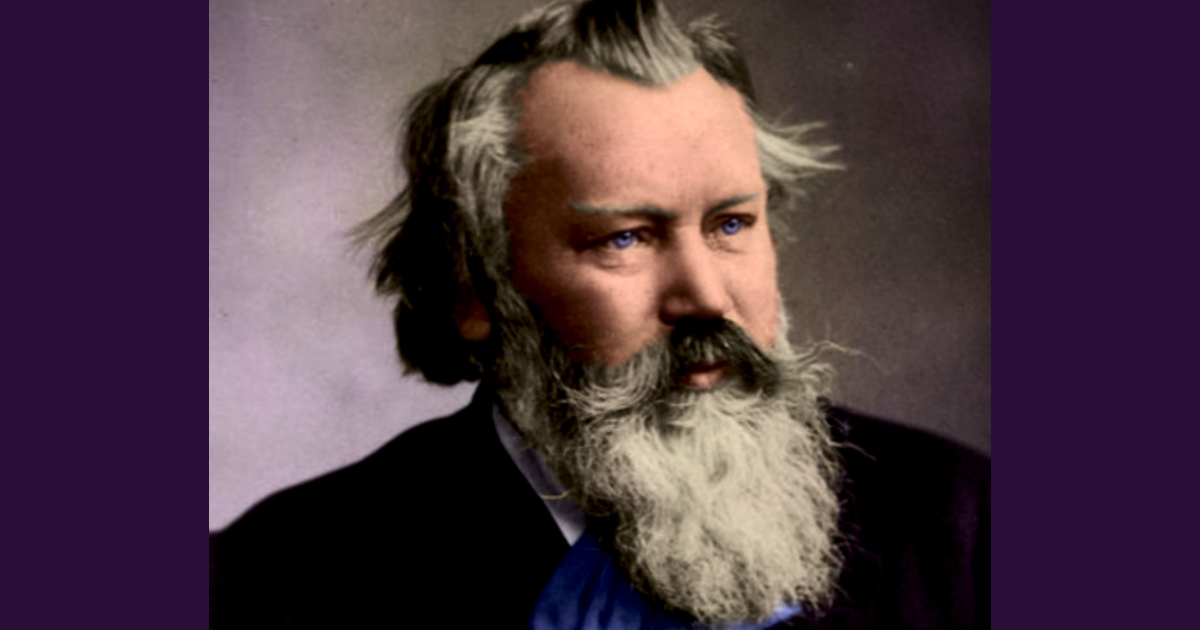

If you ask my nonagenarian father what he knows about Johannes Brahms, he can name the lullaby and the three B’s (“Bach, Beethoven, and Brahms”) and nothing else. Probe further and an indistinct association emerges between the fourth grade and the title “Hungarian Dance No. 5,” although Dad seems a bit surprised when I point out that the title belongs to the lullaby guy. And yet, if you flip through my parents’ old LPs, you will encounter numerous Brahms recordings, including a box set of the complete orchestral works that no one knew we had.
I could easily ascribe this to old age, but that doesn’t help me explain my own inability to encode neural connections pertaining to Brahms. I find his music harder to identify and retain than any other classical composer. My ear is untrained, and my youth was devoted to weird pop music jumblings—Russ Taff, Richard Thompson, and Radiohead—but I can hold my own in a game of Name That Composer if the composer is Mozart, Chopin, Sibelius, or Telemann. Not so Brahms. His style never announced itself vigorously enough to grasp my attention, and while I might stay pleasantly adrift in its sonority, any attempt to focus on craft always dissipated with the first available distraction.
So why did I buy Jan Swafford’s Johannes Brahms: A Biography? Why did I devote 80 days of my crowded reading life to a book about a composer whose music I neither knew nor enjoyed? Why wasn’t I deterred from my commitment to read it when the publisher’s apparent calculation that an audiobook wouldn’t return their investment consigned the book to weekends-only spurts? Why did I repeatedly decline to skim or scan or chunk or DNF* The Brahms Lullaby, as my brother pointedly nicknamed it the thousandth time he saw the 1.55-pound paperback tumble from my slumbering hands?
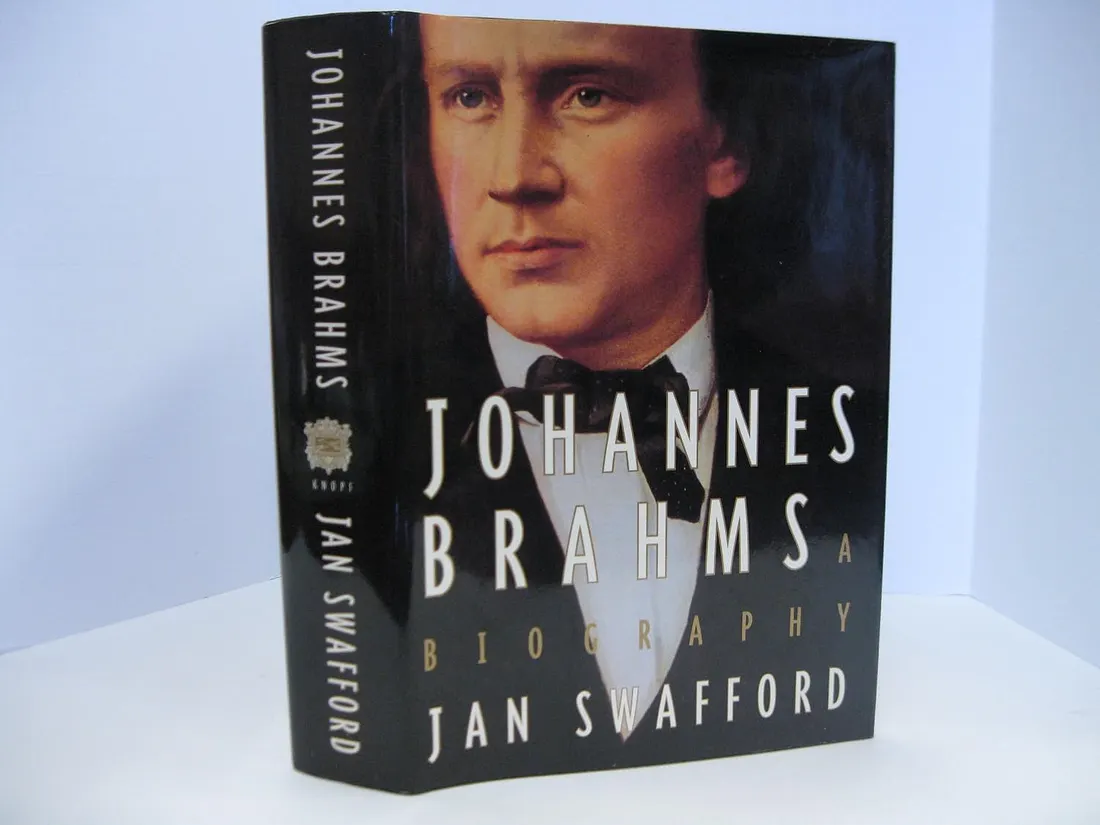
Yeah, it’s got girth.|Provided by the author
* DNF = Did Not Finish
April 6 to May 1
Promise Made, Order Placed
I keep correcting my brother’s perception that the only reason I kept reading the 636-page compendium was to honor a pledge to a Reddit user who was thinking through one of Swafford’s most intriguing contentions:
The mode of listening that Brahms condemned Bruckner for fostering—wallowing without thought in a bath of sonority and emotion—is how audiences today largely listen to Bruckner symphonies, Bach fugues, Wagnerian opera, and Brahms.
The Redditor invited fellow lit fans to evaluate that claim, offering a remarkable one of his own in the process: “I find Brahms and Bach endlessly interesting, engaging, and delightful, and Wagner and Bruckner bore me to tears.” I stared at those words for a beat, my brow furrowed in confounded self-implication.
Brahms? Endlessly delightful? What was I missing?
Even after I’d spun those family recordings of Brahms’s First Symphony, even after I’d clocked it as the piece that clinched Brahms’s reputation atop the Romantic hierarchy virtually overnight, even after I’d read Swafford’s page xxi◆Teenaged Jan Swafford falls in love with Brahms First Symphony account of a high school First Symphony performance that permanently transformed him from an aspiring football player into one of classical music’s foremost chroniclers, even then, I still couldn’t pick the climactic fourth movement out of a police lineup.
On Reddit, I pled guilty to Swafford’s indictment but fronted on Brahms: “I enjoy both the Brahms and Wagner ends of the spectrum, but my ear is untrained, and my mind too wanders through the sonority.” When my interlocutor replied with a chipper, less-than-overwhelming endorsement (“I just did a bunch of complaining about the epilogue to the book above, but I do really recommend it in general!”), I unthinkingly jotted the fateful pledge: “I’m looking the Swafford up on ThriftBooks!”
My brother was wrong, of course: yes, I’d promised to check out the biography, but I’m not so scrupulous about keeping internet promises that I’d sacrifice twelve consecutive reading weekends just to keep one. I considered it because I needed to earn another freebie from ThriftBooks’ diabolical rewards program. I ordered it because Swafford came highly recommended as a propulsive music biographer and because his Brahms is a fraction of the length of his Mozart and Beethoven. I cracked it open to get a stronger grasp of Brahms’s place in the larger context of a fascinating era in music history.
If I’m honest, I read it as a frustrated inward dare. If I could read 636 pages on a composer who steadfastly refused to stick in my head and come out the other end just as oblivious to his delights, then I’d have absolute, inarguable confirmation that there was something seriously wrong with me.
May 2 to June 6
Pages i to 74
1833 to 1853
Brahms Ohne Bart or The Brahms Lullaby?
Swafford’s introduction strengthened my resolve to go through with the dubious project. It bubbled with intellectual intrigue. He describes the challenge of researching a recalcitrant subject who deliberately burned his papers to confound would-be biographers. He promises a lively translation of the primary materials that employs anachronistic use of idioms and contractions. He sets up the essential tension in Brahms’s music between respect for the structured formalism of Classical forerunners like Mozart and Haydn and affinity for the emotive Sturm und Drang of Beethoven. He pits traditionalists like Brahms, his mentor Robert Schumann, and his mentee Antonin Dvořák against the envelope-pushing experimentalism of “New Germans” like Johannes’s reviled rival Franz Liszt and the divisive, puts-the-cult-in-culture godhead Richard Wagner. He promises to uncover the authentic soul Brahms hid behind his famously sprouting whiskers, providing his book an alternative title that produced a flattered chuckle from this lapsed German student: Brahms Ohne Bart. “Brahms Without the Beard.”
But having roped me in with a scintillating sales pitch, Swafford’s opening chapters failed to render a captivating portrait of the youthful Brahms. When later chapters referenced the childhood Johannes as “Kreisler,” Brahms’s nickname for his immature self, I didn’t have a clear picture of what that term connoted. Subsequent told-not-shown Swaffordian depictions of Kreisler as strident and irritable made me want to flip back to earlier pages. Maybe Brahms had burned all the evidence of his early character, or maybe I’d nodded off too often, but I felt blindsided: when did you show me that kid?
For the most part, Swafford relates the bildungsroman years like a diarist more interested in jogging his own memory about events than in describing or wrestling with his emotional life. I plodded through these pages, frequently procrastinating with more entertaining diversions like Alexander Pushkin’s Yevgeny Onegin, James Wood’s The Broken Estate, and… Wordle. Spotify’s New Order Hits & Classics. Studying for the office’s state-mandated sexual harassment training.
Brahms Ohne Bart was a cute moniker, but my brother’s seemed more apt.
June 6 to July 17
Pages 74 to 270
1853 to 1862
Bizarre Love Triangle
The moment Robert and Clara Schumann make their entrance◆Brahms meets Robert and Clara Schumann , Swafford’s narrative suddenly acquires a pull as inescapable as that of the Sun upon the planets. Around this time, I see a TikTok video in which musicologist Sarah Fritz asks, “Can we all just agree that the most interesting thing about Brahms is Clara Schumann?”
@sarahfritzwritr Follow for ALL Clara Schumann content! #musicianlife #schumann #brahms #classicalmusic ♬ original sound - Sarah Fritz
To me, her wry observation has the weight of unvarnished truth. It’s such a wrenchingly bizarre love triangle that I can’t help relaying it in bald, unanalyzed plot summary.
The 20-year-old Brahms plays his “Hungarian Dances” on the Schumann family piano, and Robert immediately wants to found a fan club. He takes to the press to declare that Brahms is music’s “ John the Baptist◆Robert Schumann declares Brahms John the Baptist in a music journal ”—or maybe Schumann is John the Baptist and Brahms is Christ, it’s not entirely clear. It also reads as possibly sexually fueled overpraise to those who’ve heard Robert make the same claim about a parade of promising nobodies. Wagner and his allies laugh it up, ironically dubbing Brahms “heiligen Johannes (Saint John)."
Schumann’s thin tether to reality snaps and he plummets into the Rhine◆Robert Schumann attempts suicide by jumping into the Rhine River . Brahms becomes caretaker to Clara, a talented musician in her own right. Usually too cool for school, Brahms falls so hard he can’t stop declaring hopeless adulation◆Brahms declares his love for Clara in a letter for the spouse of his ailing benefactor, who is enduring agonizing hallucinations in a nearby hospital.
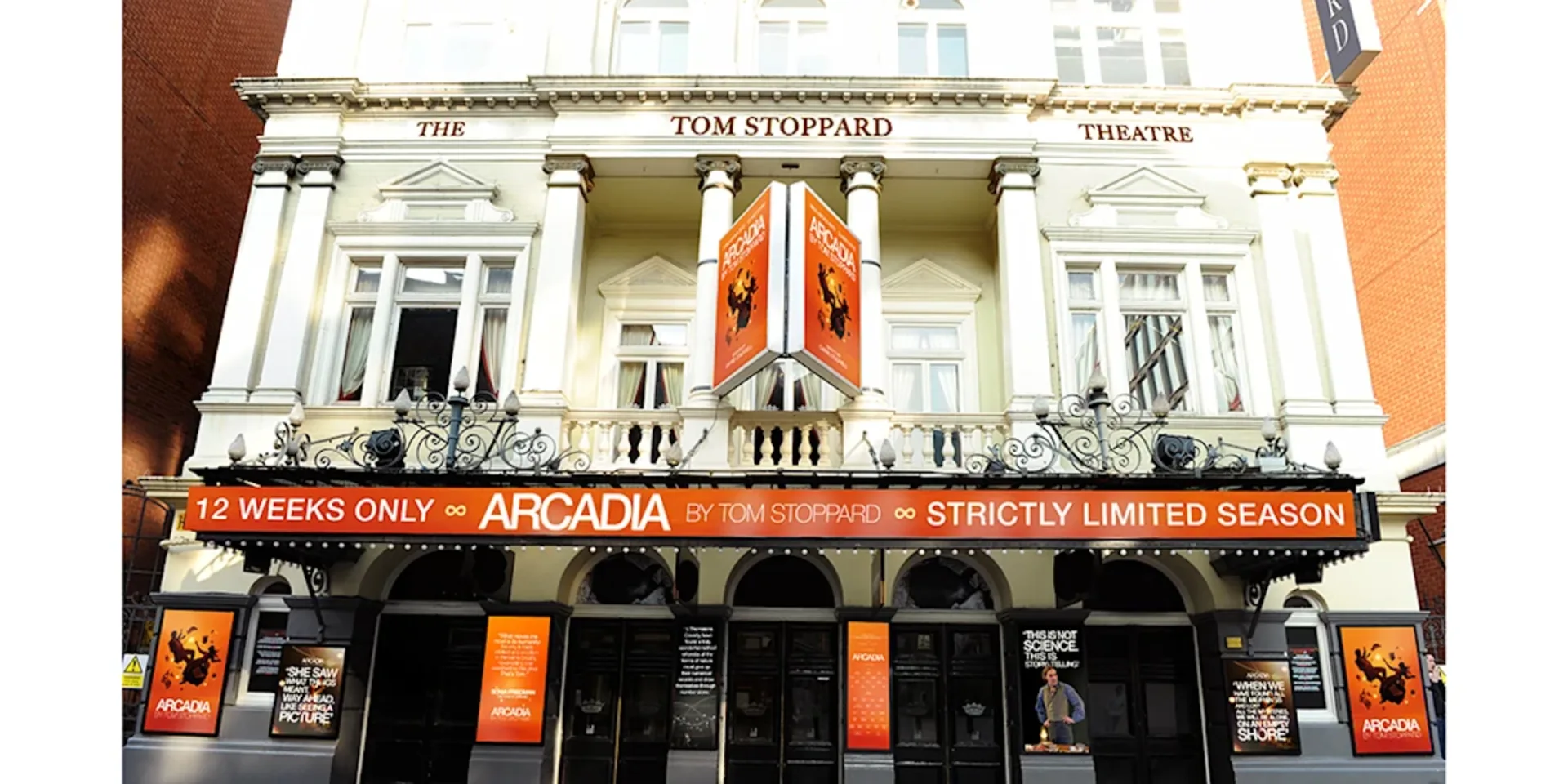
In early June◆I see a Royal Opera concert with Sting as Robert Schumann , my family watched a DVD of a Covent Garden concert that featured Sting reading Schumann’s letters to Clara. That concert ends with Schumann’s death in the psychiatric hospital, officially of pneumonia◆Robert Schumann dies of pneumonia in a psychiatric hospital , and suggests that Clara spent the rest of her life perpetually pushing the ardent Brahms away because she was worn out emotionally and resolvedly devoted to Robert.
I saw that and my momentum with Swafford slackened. If that was how the story resolved itself, I wasn’t sure I wanted to spend another 500 pages on a book of which that was the most interesting component.
Swafford, his prose expanding in ambition to meet the unfolding drama, ends up contradicting the Sting depiction. Clara eventually wants to marry Brahms, but his feet turn suddenly frigid◆Vacationing in Switzerland, Brahms and Clara decide not to marry . Like most men of his era, Brahms is an amorously doting misogynist. How could he be artistically productive in the same house as a talented woman? He starts sending her distanced remonstrations by post. She has moments of righteous indignation but more often expresses besotted devotion to both his compositions and his penetrating eyes.
Brahms’s ongoing feelings for her as the decades pass are a hot mess of densely knotted contradictions. Clara should be a better mother; he would kill to have a son like Felix◆Brahms chastises Clara for undervaluing her son . Oh, but by the way he’s openly infatuated with her 16-year-old daughter◆Brahms falls in love with Clara's 16-year-old daughter Julie and won’t let it go until Julie marries◆Julie Schumann is married. Brahms is jealous. years later. At the same time, Clara’s tenacious devotion to Brahms’s art fuels his finest work. When he’s not lecturing her about being too effusive:
“Art is a republic. … Do not confer a higher rank upon any artist, and do not expect the minor ones to look up to him as something higher, as consul. His ability will make him a beloved and respected citizen of this republic, but no consul or emperor.” Johannes Brahms to Clara Schumann in Jan Swafford’s Johannes Brahms: A Biography
Brahms’s admonition◆Brahms tells Clara 'art is a republic.' that Clara shouldn’t try too hard to sway the “voters” in favor of his sonatas has implications beyond their emotional tug-of-war. Emerging alongside his earnest, unintended torture of his faithful best friend is a sense of Brahms as an equal opportunity showman capable of inhabiting a variety of musical forms. Wagner, a lifelong critic of Brahms, grudgingly acknowledges this quality after their sole meeting: “One sees what may still be done in the old forms when someone comes along who knows how to use them.”
“Art is a republic.” Whereas Wagner was dogmatic about his own artistic supremacy, Brahms was an irascible chameleon goading the public: “Who do you want me to be next?”
[Brahms] spent a fair amount of his time writing commercial dances and a patriotic extravaganza, and piles of the sorts of vocal duets, quartets, and such that were staples of social music-making, Hausmusik, in the nineteenth century. None of this is hackwork, but it was largely written to move off the shelves, and did. Jan Swafford, Johannes Brahms: A Biography
I ask myself: Does this shapeshifting quality explain my inability to identify his music?
But just as I start to feel vindicated, I notice an objectively appreciable upgrade in the quality of his compositions. Brahms goes from “The Hungarian Dances,” lively and toe-tappable but simple, to the First Piano Concerto, with a thunderous Beethovenian opening inspired by Robert Schumann’s suicidal plunge into the Rhine and a soft Chopin-esque declaration of undying love for Schumann’s wife.
I find it so compelling, I shell out $25 to buy a used copy of the concerto in the edition most respected by audiophiles.
July 18 to July 19
Pages 270 to 636
1862 to 1897
Falling for Brahms Like Brahms for Clara
If Brahms is a chameleon, he is a progressively more proficient one, and Swafford’s lively writing is matching him note for note. Brahms may have tried to destroy the trail left to biographers, but he clearly overlooked some bangers. Swafford’s pages are increasingly dense with quotations from Brahms that reveal his abrasive humblebrag charm. “The melodies fly so thick here that you have to be careful not to step on one,” he says of his own marries◆Brahms First Symphony debuts, securing his reputation for good . When told that its last movement bears a strong resemblance to Beethoven’s Ninth, Brahms snaps, “Any jackass can see that!”
Meanwhile, my enjoyment of the book expands in ironic lockstep with my impatience with it. In mid-July, I make a determined resolution that this will be my last weekend babysitting Brahms. It’s not even a plausible conviction; I’m only halfway through Swafford’s tome, and I squander Saturday on personal business. Sunday is here, and there are 304 pages left.
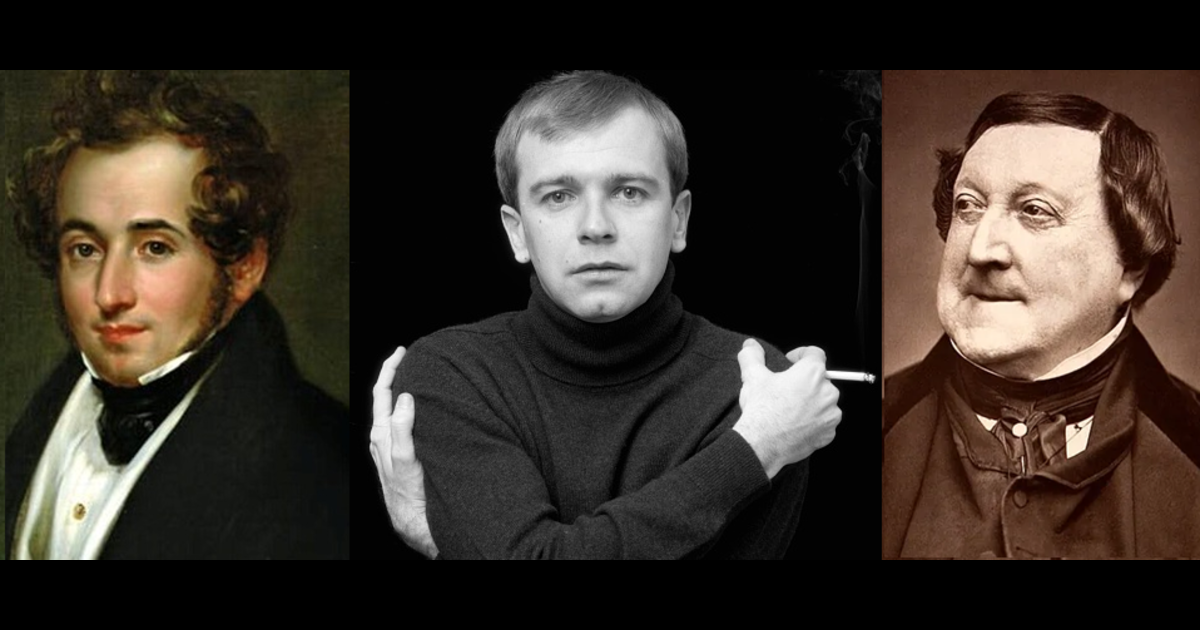
Speaking of bangers, Brahms is now churning out the masterpieces that launched him into triune immortality with Bach and Beethoven. Brahms’s fevered output seems motivated by his oft-stated fear that he will end up the Romantic era’s enduringly obscure equivalent of Luigi Cherubini (Medea). There is Ein deutsches Requiem◆The six movement version of Brahms's A German Requiem debuts , as secular a requiem as the era could offer, one that the agnostic Brahms defended by saying he not only intentionally left Christ’s name out of it but wanted to replace the word “German” in “A German Requiem” with “human.” There is the Violin Concerto, of which one violinist groused, “I don’t deny that it’s fairly good music, but does anyone imagine … that I’m going to stand on the rostrum, violin in hand, and listen to the oboe playing the only tune in the adagio?” There is the inventive classical riffing of “Variations on a Theme by Joseph Haydn, Op. 56.” There are the four resplendent symphonies.
These compositions put Brahms in Wagner’s orbit; the two are now the undisputed godheads of the Romantic world. Wagner is going to win, his emotive defiance of structural rules pushing classical music as a whole inexorably toward Modernism. Not even Brahms and Clara can deny the appeal of Wagner’s operas. She grudgingly admits that Lohengrin “is full of romanticism and thrilling situations, so much so indeed that even the musician himself at times forgets the horrible music.” He admires The Ring Cycle while still condemning Tristan und Isolde (“If I look at that in the morning, I’m cross for the rest of the day”). But even as he rises to Wagner’s strata, Brahms is not bold enough to challenge Bayreuth’s maestro on his own playing field. He gives up his lifelong ambition to write his own Fidelio (Beethoven’s sole opera). Once upon a time, Brahms had brainstormed libretto concepts with Russian novelist Ivan Turgenev◆Brahms and Turgenev vacation in Baden-Baden . Now, he jokes away the whole idea. “I am as likely to write an opera as to marry,” he quips.
The complex friendship of Brahms and Clara continues to provide Swafford’s emotional core, but as 5am Sunday turns into 8am Sunday, the music itself becomes the surprising star of the second half. I listen to it as I read Swafford’s mellifluous and cerebral analysis of the latter works. My untrained eyes race with surprising comprehension past pasted chunks of sheet music and fluent technical explications (“The movement ends in almost pure E Phrygian, only with a raised third on the tonic chord for a touch of E major”), nestling into the writerly effusions that finally shed light on beautiful melodies that were previously unattainable to me:
The piece begins with a searing, anguished adagio, with relentless pounding timpani. That extended introduction, going through several stages, poses the essential “plot” of the First Symphony: call it fate. … It is one of the most spine-tingling beginnings of any symphony, plunging us into a world dark, questioning, shifting, striving toward some indefinable goal. … This is music first sketched in the early 1860s or before; in feel it is the Brahms of the Werther years, the opening of the D Minor Concerto, the passion and frustration of Young Kreisler. Fate! Fate!
As the pages fly by, my resolve strengthens to avoid spending another 80 days on the second half of the book. That would take me to Halloween weekend, when the Chicago Symphony Orchestra is performing Ein deutsches Requiem, individual tickets not yet on sale. But if my determination keeps me glued to my chair into the afternoon, what keeps my blurry eyes affixed to the pages is Swafford’s fluid prose, and the sudden legibility of Brahms’s musical themes. I don’t claim to have fallen for Brahms like Brahms for Clara. The tally of skipped bars was higher than the tally of skimmed paragraphs. But when 1pm arrives, I breathe a sigh of relief. 304 pages turned today. I have finally sung Brahms his own lullaby.
July 20
Aftermath
The more I listen to Brahms, the more legible his compositions are. My brain’s former unwillingness to recognize patterns amid his impassioned drama and eminently accessible melodies, particularly in the gloriously fertile period between ages 35 and 52◆Brahms Fourth Symphony debuts , has melted entirely away. But in retrospect, it’s not entirely mysterious. I think it had to do with his impeccable craftsmanship. In 1876, Brahms wrote about the importance of meticulous perfectionism: “Keep going back to it and working it over and over again, until … there is not a note too many or too little, not a bar you could improve on,” he told a conductor. “Whether it’s beautiful too, is an entirely different matter, but perfect it must be.” I think that prioritization of gloss over warmth caused me to tune him out at times while he hopped from optimized form to optimized form.
A couple weeks after finishing Swafford, I decided to whether to delay a lakeside vacation in order to hear the Chicago Symphony Orchestra play an outdoor rendition of Brahms’s First Symphony fused with excerpts from Radiohead’s landmark alternative rock album OK Computer, an album I rank among the best of all time. At the timpani-rolling crescendo Wagner smirkingly called “Beethoven’s Tenth,” I hear the familiar words of “Electioneering.” They conjure the shapeshifting Brahms, who finally secured my vote in his republic of art.
I will stop, I will stop at nothin’
Say the right things when electioneering
I trust I can rely on your vote