To [Lytton] Strachey, as well as to other intellectuals of the early part of the twentieth century, [Victorian novelist George] Eliot was part of a bygone era that was the better for being gone. The falling-off of regard was precipitous. Almost immediately after Eliot’s death critics vied with each other to demonstrate their own vitality by thinking up new ways to characterize her deadliness. “It is doubtful whether they are novels disguised as treatises, or treatises disguised as novels,” one critic wrote of her works. … In 1895 George Saintsbury was able to note that while her novels might still be read, they were not admired by anyone whose opinion counted for anything. (Saintsbury was a well-known literary critic, whom no one now reads.) Rebecca Mead, My Life in Middlemarch
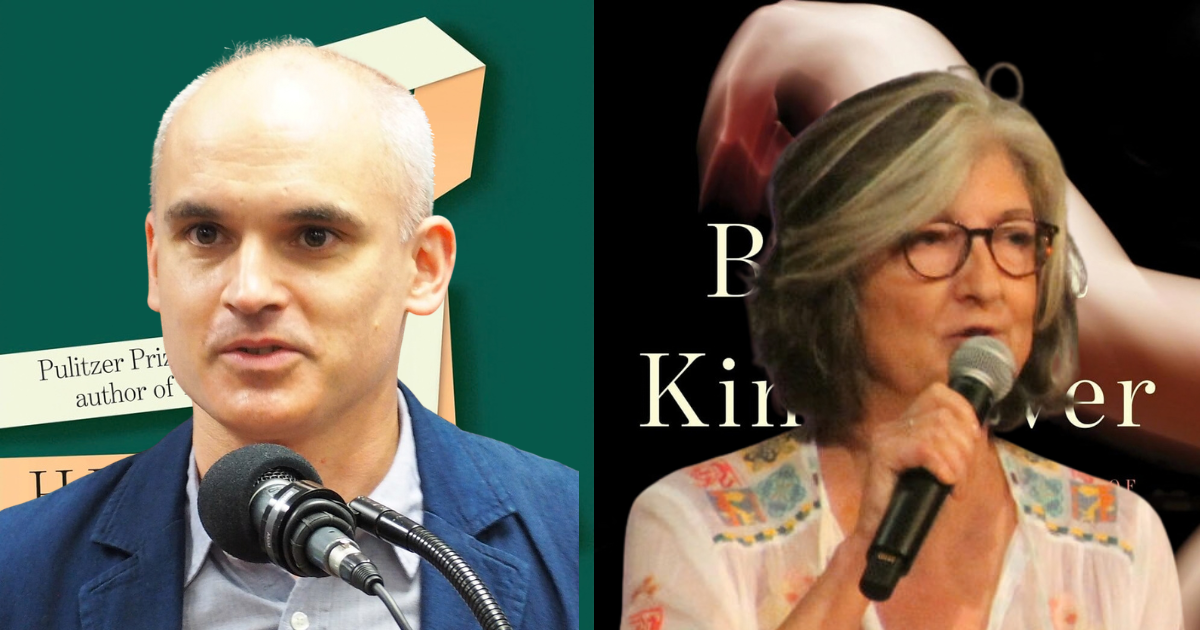
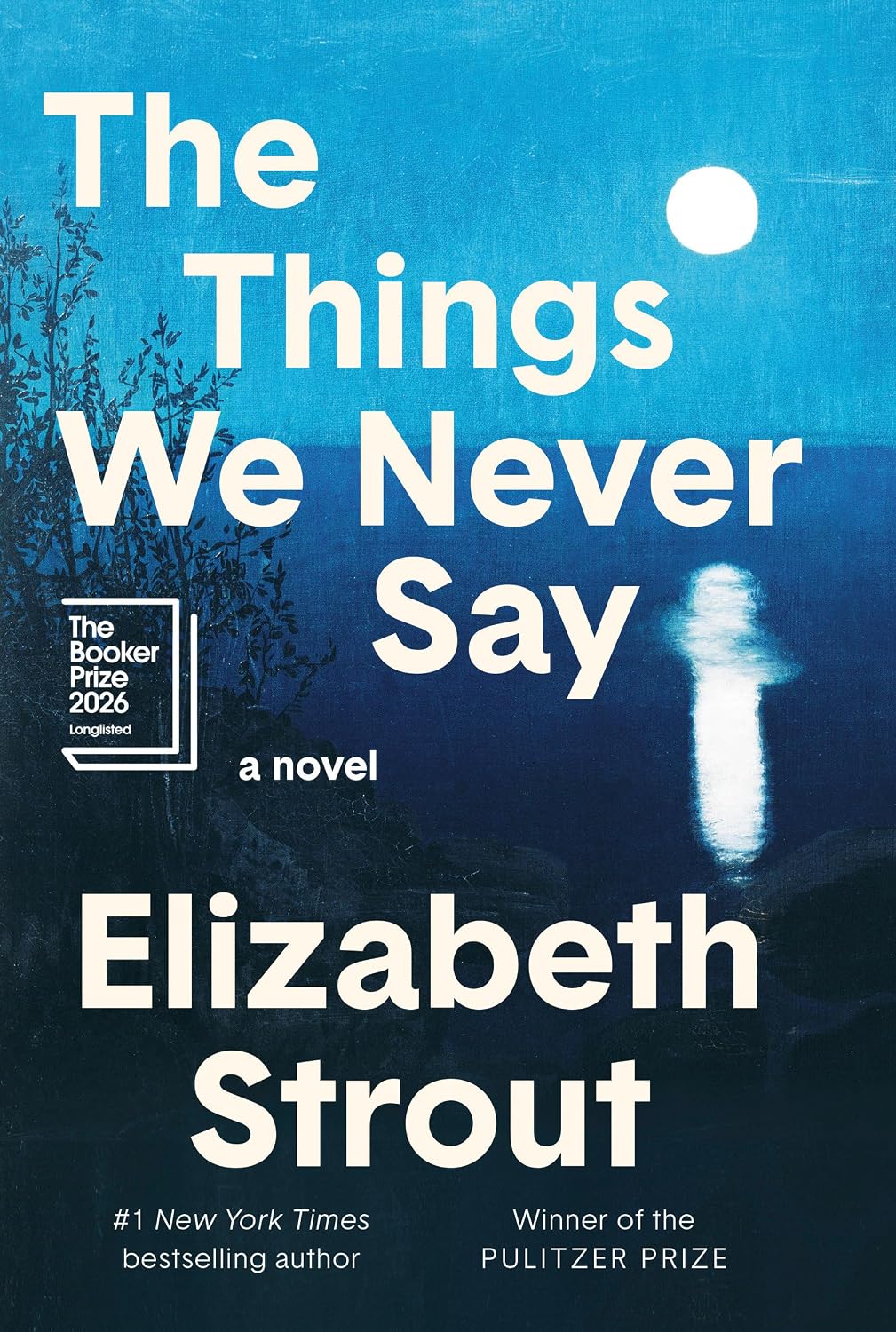
Youth often regards the wisdom of the saints with distrust, even outright scorn. Matriculants to Generation Z◆The minumum birth year for Gen Z inclusion (born ‘97-2012) wield a hypersensitive bullshit detector tuned to wary tintinnabulation any time sainthood is bestowed upon a straight white male. That tendency doesn’t prompt author Elizabeth Strout to temper her earnest canonization of high school history teacher Artie Dam, the hero of her latest novel, The Things We Never Say:
Evie spoke afterward of Artie always in terms of his being a saint. He was a saint, she said this again and again as she lived the rest of her life, never marrying again. An absolute saint, she said. Elizabeth Strout, The Things We Never Say
The hagiographic tone is not just widow’s warmth. Substack’s Ron Charles attributes a compatible statement to Strout herself: “This Artie, I love him.” I wonder if Strout is deliberately echoing George Eliot, whose favorable comparison of her Middlemarch heroine Dorothea Brooke to Saint Theresa was the thematic spine of the novel.
The effect of her being on those around her was incalculably diffusive: for the growing good of the world is partly dependent on unhistoric acts; and that things are not so ill with you and me as they might have been, is half owing to the number who lived faithfully a hidden life, and rest in unvisited tombs. George Eliot, Middlemarch
The sainthood of both protagonists emanates not from extravagantly pious deeds but from self-effacing acceptance of their flawed fellow travelers. Dorothea saves the day because she sees Tertius Lydgate’s scientific dedication instead of his gambling addiction, Rosamund Vincy’s vulnerability instead of her henpecking manipulativeness, Will Ladislaw’s tenacious decency instead of his prickly egotism.
Artie has the same moral x-ray vision. Evie initially thinks he is “soft” for telling an awkward student that the world can be changed by personal authenticity. But she comes to see toughness in Artie’s saintly ability to turn a bully into a Shakespeare scholar. Or a Trump supporter into his most trusted confidant. By the novel’s conclusion, Artie — hang on, his confidant was what now??
If that last example instinctively feels like a bridge too far into MAGA apologia, you may have the same difficulty swallowing Strout that Gen Z BookTokkers have been voicing as The Things We Never Say laps the track toward the September 22◆Booker Prize shortlist for 2026 announced. announcement of the 2026 Booker shortlist. Mind you, I am a Gen X◆The minimum birth year for Gen X inclusion liberal (born ‘65-‘80) who still feels sadness over Charlie Rose’s absence from late night television, who can’t help finding George W. Bush a wee bit adorable when he pals around with Michelle Obama, who maintains a reservoir of affection for Woody Allen’s films despite decades of red-flag marriage to his own stepdaughter and damning allegations of worse. But even I took a good long look at Strout’s empathetic bridge across Trumpism before I reluctantly followed Artie across it.
Some observers, especially those who paused homework assignments to watch the Brett Kavanaugh hearings and the George Floyd protests, find Strout’s call for empathy less palatable because she uses the 2024 US presidential election◆Donald Trump re-elected US President as a thematic backdrop. I ultimately appreciated the radical willingness of The Things We Never Say to extend the traditionally humanizing power of fiction over “big, beautiful” barriers.
Who’s Afraid of George Eliot?
In her own time◆George Eliot dies , Eliot was adulated for her penetrating moral wisdom. No less an embodiment of the Victorian Era than Queen Victoria herself actively sought Eliot’s autograph. Victoria’s heir, Edward VII, read Middlemarch 15 times in 15 years. One (unnamed) critic quoted in an 1883 issue of The Atlantic went so far as to suggest that Eliot’s fiction regulated the moral register of daily life, claiming her novels prevented “our highest moments from making our every-day experience seem vulgar and incoherent, and … our every-day experience from making our highest moments seem spectral and unreal.” Even the novelist known as The Master, Henry James, who condescendingly denigrated Eliot’s storytelling capabilities, conceded of her fiction that “much should be forgiven it for the sake of its generous feeling and its elevated morality.”
However, what passed for lofty moral insight during the 1870s seemed insufferably credulous by the turn of the century. “She became one of the butts for youth to laugh at,” wrote Virginia Woolf, “the convenient symbol of a group of serious people who were all guilty of the same idolatry and could be dismissed with the same scorn.” Obsessively judgy Victorian moralism was a strangulating corset to Woolf’s generation, and perhaps her contemporaries like the progressive Bloomsbury Group (those in Woolf’s vaunted literary clique) suspected Eliot, for all her agnostic humanism, of secretly wanting to bind it inextricably to their hips. Woolf herself pushed back on that cynicism, giving Eliot credit for a rare willingness to target Middlemarch at “grown-up people,” but even Woolf confessed “bursting into laughter” at one of Eliot’s earnest dictums.
Talking ’Bout My Generation
Ironically, the path-blazing modernists applied the same withering hindsight to Middlemarch’s meliorism that Strout’s generation, the Baby Boomers◆The minimum birth year for Baby Boomer inclusion (born ‘46-‘64) applied to Jim Crow, the Vietnam War, and married couples with matching twin beds. As anyone knows who has logged into a social media platform since Facebook conquered the pre-Millennial generations, the Gen Z consensus on their Baby Boomer ancestors is that the one-time hippies long ago sold the Woodstock farm in exchange for bourgeois comforts. That is not sheer imagination, but Gen X bears more responsibility for the outcome of the election than do the Boomers. Cornell’s Roper Center reports that Americans aged 45 to 64 favored Trump in 2024 by a double-digit margin, 54% to 44%. I am sorry for so many reasons to say that that demographic includes me. (I was 51 on election day.) Gen X screwed the pooch in this election cycle; there’s no evading that. Strout, who turned 65 the day MAGA stormed the Capitol◆The Capitol stormed by MAGA; Elizabeth Strout turns 65. , is in a less compromised bracket. Trump won 65-and-up by only one point.
That brings us back to The Things We Never Say, a title almost lifted right off a Woolf character’s manuscript in her debut The Voyage Out. Woolf’s youthful Terence Hewet writes Silence, or the Things People Don’t Say to convey the legacy in his generation of Victorian spiritual amputation. Strout invokes it to imply that the same paralyzing inhibitions lurk behind the mindless extroversion of Trump’s America.
Saintly Artie Dam, every student’s favorite history teacher, is roughly halfway in between my age and Strout’s. He is 57 when our myopic peers send the Charlottesville President, the “Enemy of the People” President, the Bleach Injection President, the “Cats and Dogs” President back to the People’s House. That day takes place roughly halfway through the 201-page novel. The election does not drive the plot, but it looms over it with nearly the same menace that Philip Roth conjured in his Lindbergh-beats-FDR alternative history The Plot Against America. It is the invisible white hood in the midst of a brawl over antisemitic comments at a school soccer game. It seeps into the loneliness that makes Artie indulge suicidal and kleptomaniac impulses. It is the context that darkens Artie’s discovery that his beloved son Rob was conceived by a jackass math teacher with a Trump-sized ego. Put differently, it is not the story of the novel but it is the novel’s subject. Late in the book, Strout highlights the connection in crimson:
Artie had watched as the new president sneeringly humiliated the leader of Ukraine in the Oval Office. He listened with horror as the man said he would like to make Gaza “the new French Riviera.” He watched as the president deported people to foreign prisons and arrested students who had spoken out against the war in Gaza, students who could have been Artie’s a few years earlier, just taken off the streets. … He watched as people in Gaza starved and the United States did nothing about it. Every day brought something new. On and on it went. Artie watched all these things, and he slowly understood that what he had felt the day of the election was true: His country was committing suicide. Elizabeth Strout, The Things We Never Say
The metaphor of self-evisceration feels both imprecise, particularly in resistant Blue America (the novel is set in Massachusetts), and inartfully direct. But the line it draws between Artie’s sense of loss and today’s cable news scroll could not be more stark.
Not surprisingly, The Things We Never Say, steeped as it is in page one politics, has divided our nation’s book communities, with older readers split between those who loved the book and those who disliked the overt politics. Charles, a Boomer close to Strout’s age, suggested The Things We Never Say deserved longevity equal to that of Stoner by John Williams, which is as popular on BookTok as The Great Gatsby is in American Literature courses. The Boston Globe’s Priscilla Gilman, a Gen X-er born three years before me, argued that the political content diminished a usually reliable author. “The fiction seems to lose its bearings on the way to becoming parable or allegory,” Gilman claimed.
I have not studied all of the 8,741 reviews that have already been posted on Goodreads as I write this, but the generational divide appears as soon as you probe for it. Search for “too political,” and 1,733 reviewers turn up, most my age or older. Mary Lins, a 69-year-old Strout diehard from Jefferson City, Missouri, “kept reading, hoping that once she’d ’had her say’ the book would concentrate more on the characters and plot (which is riveting), but the political doom and gloom continue throughout.”
Okay, Boomer.
Younger Goodreads and BookTok reviewers did not share my generation’s queasy unreadiness for political fisticuffs. When I had read 10 pages that I dismissively and naively described to an email correspondent as “realism without being entirely real” and “wry without being funny,” I received an eye-opening TikTok by Alfie Tindall, known on TikTok as Alfread. He is a 24-year-old parasitologist in training from Glasgow who summed up the view I later encountered again and again from Gen Z critics. “I think reading is one of the most political things that we can do,” he began, “and I commend authors who are bold enough to dive into conversations about current affairs.” To Alfread, Strout had written “about 200 pages of centrism and fence-sitting.” Her engagement amounted to appeasement for mainstream audiences, and she refused to allow her characters to “commit to any kind of political take.” Her references to Gaza could have been designed to “educate” her readers, but instead dodged an obligation to call a spade a spade. Alfread is methodically precise; a United Nations commission has investigated Gaza and has determined it fits four of five criteria for genocide. Why then can’t Strout use that word? He also called her out for a “both-sidesy” tendency to equate Israel and Gaza while clearly attributing responsibility for the Ukraine conflict to Russian aggression. Alfread’s controlled fury cleanly articulated his generation’s impatience with moral prevarication. His critique of Strout echoed the words of Jesus in Revelation: “So then because thou art lukewarm, and neither cold nor hot, I will spue thee out of my mouth.”
Hot Take — So Please Don’t Spit Me Out!
I find the readily discernible generational fault lines over The Things We Never Say fascinating, but I have trouble seeing my own view in almost any of the reviews I encountered. Like Alfread, I regard Strout’s willingness to take on a divisive political conversation as a strength rather than a liability. I am far more persuaded by Alfread’s bold political standards than Gilman’s aversion to allegory.
I am also aligned with Alfread in that I am not as enthusiastic about Strout’s character work and prose as Ron Charles. In fact, without Strout’s ominous invocation of the current creeping, tendril-clutch spread of Fascism, I would have found Strout’s depiction of an everyday saint quietly making a difference in the lives of his students tepid and clichéd. Artie is a pleasure to meet, and I enjoyed his unabashed awkwardness. I like that he is more principled than clever, and I admire the way Strout juxtaposes his teacherly wisdom with silent, self-probing doubt. But for all that, there is a patness and perfection and thinness to the characterization that was never one of George Eliot’s shortcomings. If we are to pit Strout’s saint against Eliot’s, I will choose Dorothea’s brash naïveté and pained romantic timidity every time. The heartbeat of her characterization betrays an unplanned arrhythmia that leaps off the page. I never got that feeling from Artie Dam.
Where I part ways with Alfread is in his principled rejection of Strout’s genuine political audacity. His diagnosis of “both-sidesism” is a clear misreading of the text. He argues that Artie becomes suicidal because “divisive political times” “overwhelm” his “mental health.” But the word “divisive” (and its variations) do not appear in the book at all, and Strout never draws a causal relationship between cultural friction and Artie’s depression. Rather, suicide is employed as a metaphor for the nation’s capitulation to Trump: “His country was committing suicide.” I do not understand how such an intelligent reader construes that verdict as “fence-sitting.” As for the charge of “appeasement,” Strout’s political punch is restrained not by a desire to please Mary Lins or me or Alfread (after all, she clearly hasn’t) but by the same force that hushes her matter-of-fact prose. She isn’t a showy or performative writer, and honestly she is sometimes more direct than she needs to be. For purely aesthetic reasons, Strout could stand to lean harder on metaphor and abstraction and even less on political manifesto. Alfread demands that Strout reflect his own moral certainty. But the characters in her custody are not as well-informed as he is. This approach has a legitimate authorial defense: Steely resolution is not as dramatically compelling as doubt.
Alfread is right to demand ideological authenticity, to have horror called by its own horrific name. The reason to demand that “genocide” be named as such is that its legalistic accuracy stamps out the obfuscating power of euphemism. Politicians use language as a roadblock, to evade reality in craven subservience to the criminal Netanyahu regime. But Strout has already indicted the United States for letting Gazans starve. She has acknowledged that Netanyahu bombs children to prolong his hold on power, and to obstruct corruption charges in the Israeli courts. She has let true suffering breathe inside her make-believe. In that context, Alfread’s demand for a password strikes me as borderline unliterary. “Genocide” has an undeniable currency in politics, but fiction can employ a broader vocabulary. It should not be shackled to literal rigidity. Alfread is correct to point out that the key voices in the international community have ratified the accuracy of the term, but in a novel there are other ways to accurately describe suffering.
I would also defend Strout’s use of Elon Musk. Her characters are not as firm in their rejection of him as Alfread would like (“Why did we need to bring That Man into it?”, he asks). And I will agree that if we can’t call out Musk for his callous endangerment of African children who depended on USAID programs he canceled, we lack moral understanding. But Eliot would say that the ability of a writer and reader to put themselves in the shoes of a reckless manslaughterer is fundamental to the moral power of fiction. When Strout invokes Musk’s trans daughter and abusive father, she isn’t letting Musk off the hook or asking us to let our hearts bleed for him. She is dramatizing the debate between Artie and Evie.
Of course, this is all my hot take, the perspective of a Gen X’er who has already described himself as a “liberal.” That label already cost me the trust of some in Gen Z, who tend not to hear the same meaning in that word that my peers do. I give Alfread a lot of credit for his openness to this debate. I sent an email across the Atlantic last weekend, and he wrote back within ten minutes: “Differences in opinion are what make book discussion so interesting and I’m sure there is a generational aspect behind it that I’d love to see you explore.” I would simply submit that “too political” and “not political enough” can themselves be euphemisms for “not fully aligned with my politics.” We should recognize that Strout is out on a limb regardless of where we are in the tree.
Epilogue
In May 2026, The Guardian put an exclamation point on Eliot’s recovery from Edwardian ignominy by naming Middlemarch the single greatest novel in the history of the form. In other words, Strout could dunk on all 12 of the other longlisted novels and still fail to lay an accidental pinkie finger on Eliot. But the important thing is not the fatuous artistic competition, and make no mistake, all artistic competitions are fatuous.
Eliot may be too earnest for Woolf’s generation and Alfread’s as well, but I hope there is a timelessness to her priorities. “The only effect I ardently long to produce by my writings," wrote George Eliot, “is that those who read them should be better able to imagine and to feel the pains and the joys of those who differ from them in everything but the broad fact of being struggling, erring human creatures.” If we cannot recognize the humanity of the inhumane, even in imagination, our own humanity is called on the carpet. My point is not that fictional empathy pulls rank on real-world reckoning. Real-world anything outranks fictional anything. In the real world. But fiction has to be distinct, a space where imagination issues temporary pardons at the expense of real-world rage.
Eliot’s best defense may have been scripted by her contemporary Oscar Wilde, the last line of his own magnum opus. Wilde was just beginning to find himself in fiction when real-world cruelty stripped him of dignity and broke his extravagant heart. Is Eliot an outmoded purveyor of sentimental sap, Oscar?
“On the contrary, … I’ve now realized for the first time in my life the vital importance of being earnest.”
My thanks to Alfie Tindall.