
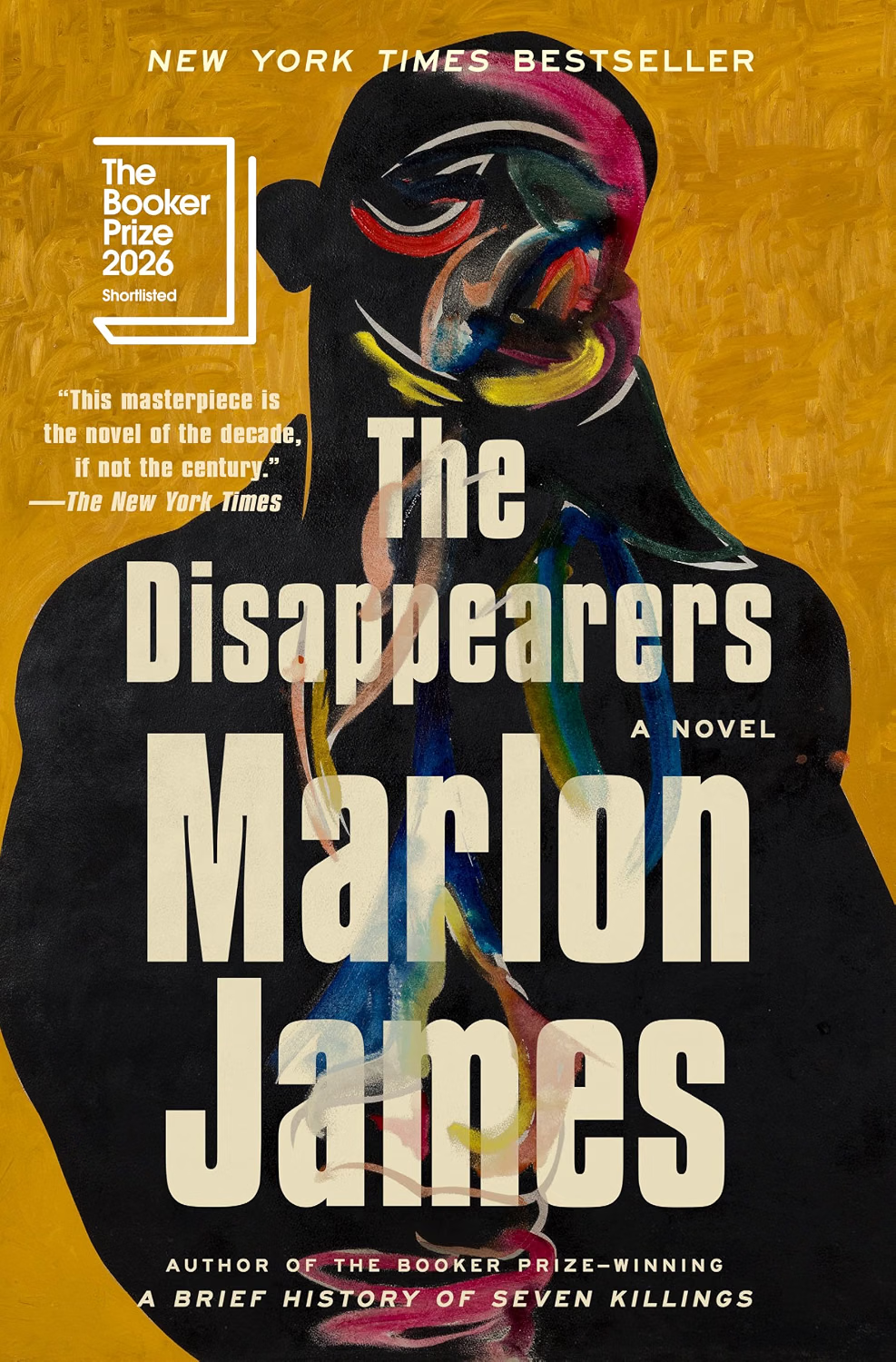
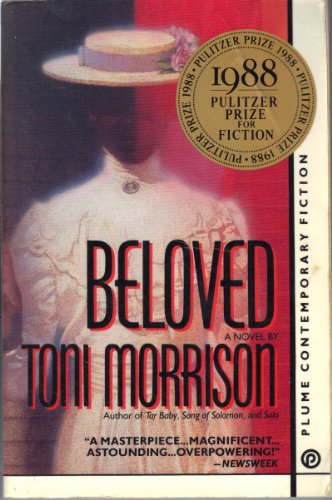
I ranked and reviewed each of the shortlisted novels. I also paired each novel with a classic. The winner of the 2026 Booker Prize was announced Monday November 9 at 9:45 PM GMT. It was livestreamed at The Booker Prizes YouTube Channel.
“To love Oscar is the beginning of a lifelong romance.” Oscar Wilde on the 1983 Academy Awards
Wilde, whose business cards read “Eminently Quotable Dandy” years before he wrote his first line of stage dialogue, later revised this epigram to the more familiar “To love oneself…” But the initial inspiration was, according to my photographic memory, the way that year’s loaded Best Picture race sparked an intense addiction to awards-season ritual that has lasted to this day’s conclusion of my 2026 Booker Countdown.
For me, the 1983 Oscar season began the previous summer, when my two closest friends—and six classmates who didn’t care for me or my habit of walking around the classroom singing to myself—were toted to the local multiplex for a 10th birthday screening of E.T.: The Extra-Terrestrial. We were to be nine at table, but my younger friend Vincent’s critical analysis, at his ninth birthday party, of the scene where Elliott screams “You’re killing him!" had consisted of terror-induced vomit. So Vincent’s mother permitted a brief social cameo for cake and swings followed by an early exit. Even then, everybody knew the Oscar winner was always a three-hour biopic on a Topic of Importance, so E.T. was happy just to be nominated.
So was Tootsie, the Dustin Hoffman comedy about a cross-dressing actor that occasioned a robust family dialogue regarding the fluidity of gender constructs that mostly consisted of me screaming, “Siskel and Ebert gave it two thumbs up!” and Mom peremptorily declaring, “Siskel and Ebert see so many movies they don’t know what they think anymore!” It was not exactly a PFLAG moment for Mom. Her rural West Virginia upbringing had taught her that movies were not an acceptable pastime. She informed us that God had made men and women different for a reason, and then confiscated the audio bootleg of Tootsie my elder brother had recorded in the movie theater by affixing Scotch tape to the write-protect notches atop a Boy George album.
My other brother was especially enthusiastic about the event a high school buddy, who went on to be one of Hollywood’s earliest adopters of gay marriage, would later call the Gay Superbowl. My brother distributed mimeographed Oscar ballots to our classmates in a contest that E.T. won in a landslide. But the prohibitive favorite with actual AMPAS voters that year was Gandhi, a three-hour biopic in which British soldiers brutally clubbed crowds of Indian protesters in turbans and dhoti. (“Scraps of white linen!” cried Christopher, my fourth-grade teacher’s bullying son, clutching his ballot in indignant outrage at the philistines who failed to award the Costume Design prize to the glow-in-the-dark body suits from Tron.) That violent set-piece immediately preceded a cinema intermission in which my elder brother told my father, “Oh sure, you’ll take me to this, but C.H.I.P.S. is too violent!”
I doubt if I have missed a single Oscar telecast since Michael Seirton’s memorable acceptance speech for Art Direction-Set Decoration that evening in April. (They tell me Gandhi won Best Picture, too, but that was well after bedtime.)
I learned a valuable lesson that year about the inevitability of Marlon James’s 2026 Booker Prize victory. It is, after all, a 613-page masterpiece on a Topic of Importance. James’s book is generally regarded as the prohibitive favorite in the exhaustive online coverage of a race that will finally end within hours of this review’s publication. The ponderous length of the book and the credulous comprehensiveness of the book’s depiction of resilient gay identity may indeed contribute to its air of inevitability. In that sense, it does seem like Gandhi II: Gay Lives Matter, Too.
But rather than open with a funeral procession, as did Richard Attenborough’s Oscar winner, James opens with a high school anecdote about a straight boy who tells the narrator’s sister that “she needs to check out his bedroom because he have his own video player.” It is not the swollen political Importance of James’s Topic but the exuberant comic energy of James’s voice that I came to love about The Disappearers. He revels in that style, so distinctively and historically queer in its quicksilver wit, its showy intellect, and its unfailingly compassionate resilience. He flies that flag defiantly against unremitting gales of bigotry, in unflinching affirmation of a people who refuse to spend another day hiding from themselves.
Aspiring to the Beloved
On August 30, Dwight Garner in The New York Times declared, “With this novel about gay experience and murderous homophobia in Jamaica and elsewhere during the 1980s and ’90s, James has written a masterpiece, the novel of the decade and possibly of the century thus far.” The notion that The Disappearers may be attempting a definitive summation of the gay experience would seem to place it in the tradition of Toni Morrison’s Beloved. In 1999, Alan A. Stone wrote in The Boston Globe that Morrison “wrote Beloved to break through centuries of dead history and bring the holocaust of slavery … back into living memory,” suggesting that it might just be “the definitive novel about slavery.” In May, The Guardian lent credence to that view by naming it the #2 novel of all time.
How definitive is The Disappearers? There is hardly a feature of gay life that is not discussed here. James’s gay men refuse to be embarrassed by the messy particulars of gay sex. They rehearse a drama that interrogates the connection between prison rape and gay sex. They distinguish the feelings of younger and older gays on gay marriage. Identify Prince’s Lovesexy and Bruce Springsteen’s Born in the USA album art as 1980s rites of passage. Explore the contradiction in normalizing homosexuality and using gendered language (“all I see from all of you is copying woman. Call each other sister, or bitch, or girl, or giiiiiiiirrrrrllll”). Debate community attitudes toward AIDS (“You don’t fuck around and get cancer,” “Lesbians must be God’s chosen people then, because they the only ones not testing positive”). Not of small interest to my readers, they rank the great works of gay literature.
"Never one for the Americans," he says.
"Not even Giovanni’s Room?"
"The Baldwin? Let’s just say I’m glad I didn’t read it at fourteen. Prefer Maurice."
"The Forster? Nobody prefers Maurice. Plus the movie was better."
"Bomboclaat! Wow, you rough, Rasta. What you have to say ’bout Gide?"
"If It Die or The Counterfeiters?"
Marlon James, The Disappearers
If Marlon James had this conversation after 2026, they would have to discuss Marlon James.
The Voice as Survival Skill
As an AP College English student in the early 1990s, Beloved was the novel that first taught me that form could blow the roof off of staid realism. The epiphany came when Morrison began shapeshifting perspective and vernacular, leaving both prose sentence structure and the omniscient narrator in the Ohio dust: “I am not dead I am not there is a house there is what she whispered to me.” In Imagining Characters: Six Conversations About Women Writers, A.S. Byatt (Possession) says of Morrison’s narrative shifts, “It is very daring, and at first you think perhaps it doesn’t come off.” Only with analysis, she suggests, does the power of the technique become clear.
By 2026, I’ve read numerous books that alternate between narrators. The Disappearers becomes an epistolary novel in the final third, but the prose is structurally fairly conservative. What makes James’s voice so intoxicating is his effortless encapsulation of educated, sassy gay culture. I knew James had done that exactly that from the get-go. The first third of the book is graced by the joyful teen confidence of Eddie Porteous, at once exhibiting lustful exuberance and cerebral heft. “With this sort of homo gay is what he does, not who he is, and he was gay only an hour ago.” “Sheila E. must have asked [Prince], ‘Do you want the drums like this? Or like this? Or like this? Or like that?’ and he just said yes.” When Jordan Brown took over narratorial duties in the middle section, I enjoyed his defiantly caustic voice immensely, but I couldn’t help missing Eddie. By the time Eddie returns, trauma has made him more compassionate but more cautious, and a lot less fun.
Community Superpowers
Throughout her canon, Morrison enlists African folk spiritualism as a narrative superpower.
In the best parts of Song of Solomon and Beloved, Morrison uses her fiction to narrate an African-American history which, because it has so often not been written or officially recorded, has become a necessary superstition—a myth, made of oral tellings and retellings. Her often distinguished prose, with its flushed, oral cadences and vernacular stammer, attempts to become another of these retellings, a myth that is written down but that reads as if it were spoken. James Wood, The Broken Estate
James’s distinctively gay equivalent of Morrison’s African American superpower may be the educated, sassy wit that runs throughout gay culture. It lives in the elegant paradox of Oscar Wilde, the cynical insouciance of Noël Coward, the brainy moral comedy of Tony Kushner, the calm, articulate rage of James Baldwin. You want to quote it for 613 pages and then quote through a trilogy of sequels. In The Disappearers, gay wit is a defensive survival skill of exhausting necessity, and of the three narrators, the theater queen Havelock Titus is its most elegant dispenser. “As for why,” he says after voicing empathy for an imprisoned gay writer, “Today’s episode of Sesame Street is brought to you by the letters F and U.” In a crucial late scene, Jordan Brown tries to win another match with a characteristically caustic threat. “And what?” snaps Havelock. “You take your sarcasm and affront me to death?”
The Defensive Power of Spite
“124 was spiteful,” are the first three words of Beloved. “Full of a baby’s venom.”
“I think that’s a brilliant beginning technically,” says Byatt, “It says this is a novel about spite. Which is a strange thing for a novel to be about. Not love, not hate, but spite. Which is a strange thing for a novel to be about.” It is righteous spite that leads Sethe to Beloved’s horrifying act of defiance, murdering her baby to protect it from slavery.
Spite defines James’s second narrator, Jordan Brown. He is a badass homosexual who bests a crowd of gay-bashers in a 1988 attack on a gay theater company in Kingston that is the defining horrifying act of The Disappearers. (The gay bashing is based on widespread rumor.) Jordan makes it his business to track down self-hating gays involved in the incident and lead them down a path of destruction through seduction. Jordan is so spiteful that he has anal sex in front of the hospital bed of his immobile father, a virulently abusive homophobe who has suffered a stroke.
Jordan’s story moves The Disappearers in the direction of an indulgent Revenge Fantasy in the vein of Quentin Tarantino, who delights in the slaughter of slaveholders by slaves in Django Unchained and of Nazis by Jews in Inglourious Basterds. But Tarantino’s revenge films always strike me as an excuse for onscreen brutality by a filmmaker who has always enjoyed violence and has no racial or ethnic stake in revenge. James’s revenge is closer to Percival Everett’s in James. His slave is merciless, but the emotion is part of a book that attempts to encapsulate the Black experience in the elevated context of American Literature. For James, the revenge instinct is a vital part of the gay story, but he dramatizes its exacting cost to vengeful victims.
Comedy + Distance = Tragedy
Morrison has always been unflinching in exposing her readers to brutality, but she carries the reader through the experience with her trustworthy wisdom and kindness, as well as the beauty of her expression.
After opening The Disappearers in squeamish trepidation, I was astonished at James’s ability to use the extremity of his expression to make horrifying acts of cruelty almost — palatable? Pleasurable? Survivable. James never stops performing for us even as he guides us through Hell.
everybody have a duty to kill one for if you kill two God don’t cry even the church say is either us or them so line them up in line and pick up the matic and ratatatatatatatatatatatatatatatatatatatatatat good now lock yourself in a room let the dark and the heat boil you into a stew, let the heat go from fire in your skin to fire in your mind and blame that on them too blame them for even the dark. Antony F. in Marlon James’s The Disappearers
Only in the final segment of the chapter that describes the attack does James slow down enough to let the accumulated horror show resolve in emotional desolation. The blinded victim’s repetition of his name and address, proffered expectantly like a luggage tag intended to protect us from theft, reminds me of August Wilson’s Hambone in Two Trains Running, who repeats “He gonna give me my ham” as though repetition were manifestation.
"My name is Rainford Ellis. I…I live at 529 Stilwell Road. Please help me" come from inside, and Streggeh Don’s eyes go from chucking badness to opening wider than girl in horror. He push past me and run out so fast that me really start to think it was duppy in the room.
"My name is…is Rainford Ellis. I live at 529 Stilwell Road. Please help me," he say again. Me at the doorway. I don’t want to look in. I don’t want to look in.
"My name is…is Rainford Ellis. I live at 529 Stilwell Road. Please help me." Marlon James, The Disappearers
Titanic Length Is Not Necessarily an Asset
Ultimately, though, I am inclined to conclude that Morrison’s disciplined magical realism yields a more impactful and lasting statement on the haunting legacy of slavery than James’s longer, sloppier, less story-driven tome can muster. Certainly, James must be examined on his own terms and cannot be held to Morrison’s standard. But The Disappearers is marred by its exhaustive repetition. It is burdened by the inescapable reality that there are only so many ways to graphically depict gay sex. Its penultimate episode is almost obliviously repetitive, as Jordan looks in on a victim day after day and assaults them with spite. Before Havelock’s entrance rescues the tonal direction of the writing, James seems unaware that his emotional clout is waning.
The Guardian’s verdict secures Morrison’s place in the Western canon, assuming Beloved’s 1988 Pulitzer Prize was insufficient evidence of that. But along the way, Morrison has had to survive countless banning attempts, the box office failure of Oprah Winfrey’s 1998 screen adaptation, and the willful cultural blindness of a critic with impeccable instincts. I am referring to Harold Bloom, who claimed that Beloved and Jazz … [were] top-heavy books with very strong political programs; they’re not aesthetic accomplishments.”
So I put very little stock in my own reservations when it comes to Marlon James’s lasting accomplishment and its prospects for literary canonization.
It Gets Better
A year after Gandhi won the Oscar, my mom resisted our insistence on watching Terms of Endearment win the top prize.
“We watched last year!”
“That was a special occasion. Gandhi was nominated.”
“Loving Oscar, er, oneself is the start of a lifelong romance,” wrote Wilde in An Ideal Husband. Self-love is the key to healing for the victims of oppression in both of these remarkable novels.
In Beloved, a man touches the uncomprehending face of the woman he loves. She has just told him that the child who has haunted her, who has finally left her in peace, “was my best thing.”
“You your best thing, Sethe. You are.”
I won’t reveal the context, but The Disappearers concludes with a battered homosexual reciting Shakespeare’s 29th sonnet, one that is thought by some to have been the address of the world’s greatest poet to a beloved man.
“When in disgrace with fortune and men’s eyes, / I all alone beweep my outcast state, / And trouble deaf heaven with my bootless cries, / And look upon—"
The victim can’t finish the verse, but its last line is, “For thy sweet love remembered such wealth brings, that then I scorn to change my state with kings."
| 6th Place | |
|---|---|
| Contestant | The End of Everything by M. John Harrison |
| My Review | Imprecise Peculiarity and Painstaking Banality at The End of Everything |
| Summary | I enjoyed Harrison’s indulgent weirdness at times, but I wondered why he seemed to conceal his freak flag while rambling on ad nauseum about modern suburban settings. |
| Classic Pairing | The Hitchhiker’s Guide to the Galaxy by Douglas Adams |
| Why | Tonally miles apart, but both create apocalyptic futures with aliens who flippantly offer replacements for our core humanity. |
| 5th Place | |
| Contestant | The Things We Never Say by Elizabeth Strout |
| My Review | Elizabeth Strout Tries the Patience of a Saint |
| Summary | Bold in its politics but mild in its artistic ambition. |
| Classic Pairing | Middlemarch by George Eliot |
| Why | Both present their protagonists as everyday saints and use recent political events as backdrops. Both divided readers along generational lines. |
| 4th Place | |
| Contestant | Black Bag by Luke Kennard |
| My Review | The Alphas, Betas, and Gammas of Masculinity in Black Bag |
| Summary | Every hilarious page serves its narrative throughline about what has become of straight male identity in the wake of feminist reckonings. |
| Classic Pairing | The Double by Fyodor Dostoevsky |
| Why | Kennard’s story begins to realize its surreal potential when Black Bag chases down his Double. The authors both cozy the reader with familiarity before things get weird. |
| 3rd Place | |
| Contestant | May We Feed the King by Rebecca Perry |
| My Review | The Poet as Novelist and Historian in May We Feed the King |
| Summary | The first novel by an experienced poet has an evocative core but an uneven historiological frame. |
| Classic Pairing | Memories of the Ford Administration by John Updike |
| Why | The parallels between Perry’s hated monarch and Updike’s reconstruction of James Buchanan, by consensus the worst president in U.S. history, illuminate May We Feed the King in numerous ways. |
| 2nd Place | |
| Contestant | The Disappearers by Marlon James |
| My Review | Is The Disappearers the Beloved of the Gay Experience? |
| Summary | Marlon James's voice is distinctively and historically queer in its quicksilver wit, its showy intellect, and its unfailingly compassionate resilience. It flies defiantly against unremitting gales of bigotry, in unflinching affirmation of a people who refuse to spend another day hiding from themselves. |
| Classic Pairing | Beloved by Toni Morrison |
| Why | Beloved is as close as Morrison comes to a definitive statement on slavery, which haunts all of her works. The Disappearers is a comprehensive exploration of the gay experience in homophobic Jamaica. Beloved is the fullest realization of Toni Morrison’s life’s work and the lasting community touchstone that Marlon James is reaching for. |
| 1st Place | |
| Contestant | John of John by Douglas Stuart |
| My Review | Staying is The Longest Journey |
| Summary | In sheer wattage per page, Douglas Stuart’s richly textured, deeply pained, and inerrantly true novel was the most moving and wryly satisfying book of the year. |
| Classic Pairing | The Longest Journey by E.M. Forster |
| Why | The fulfilling acceptance Rickie finds at Cambridge, and his growing skill as a writer, are the stakes of Cal’s sacrificial return to the island. Rickie’s misfit marriage and sham teaching job at Sawston are the island he must leave. And in standing up for himself against Pembroke, Stephen is Innes escaping at last. |